
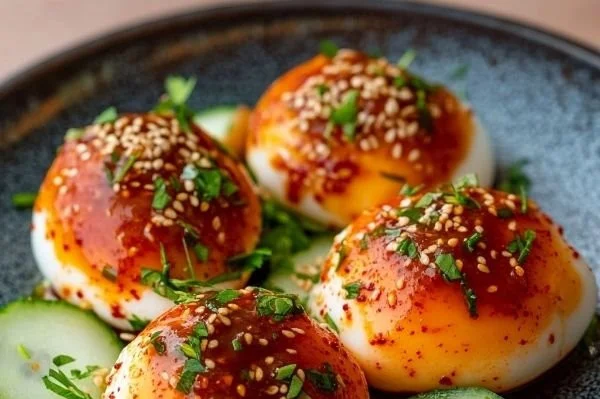
There’s something undeniably comforting about a simple egg dish, and when it’s elevated with a little bit of spice, it can become something truly special. I remember the first time I tasted Gochujang Eggs at a friend’s Korean-style brunch. As I took my first bite, the creamy texture of the soft-boiled egg and the bold, spicy kick from the gochujang took me by surprise. It was a delightful explosion of flavors that I never knew I needed in my life. Since then, I’ve made it countless times, each time adding my own twist, and it remains one of my go-to recipes for impressing guests or having a cozy meal at home.
Recipe Timing
- Prep Duration: 10 minutes
- Active Cooking: 15 minutes
- Total Duration: 25 minutes
- Portion Size: Serves 2
- Complexity: Simple
Nutritional Recipe
- Calories per portion: Approximately 200 calories
- Protein: 14 grams
- Carbs: 8 grams
- Fats: 14 grams
- Fiber: 1 gram
- Sugars: 1 gram
- Sodium: 800 mg
Why You’ll Love This Gochujang Eggs
These Gochujang Eggs aren’t just delicious; they encapsulate a unique balance of flavors that can transform any meal into a delight. The fermented chili paste, gochujang, offers a rich, umami flavor profile that dances wonderfully with the soft, silky texture of the eggs. They’re perfect for breakfast, lunch, or even a quick dinner and make for an impressive snack. Plus, they come together in about 25 minutes – what’s not to love?
The Complete Cooking Journey
Cooking Gochujang Eggs is a simple yet rewarding process. It begins with boiling the eggs until they’re just right, followed by a cooling bath that prevents overcooking. Once peeled, these eggs are tossed in a flavorful sauce, then garnished with fresh green onions. The entire journey is quick, easy, and guarantees a comforting meal that’s both satisfying and packed with flavor.
Ingredients:
- 4 eggs
- 2 tablespoons gochujang
- 1 tablespoon soy sauce
- 1 teaspoon sesame oil
- 1 tablespoon green onions, chopped
Method:
### Step 1: Boil the Eggs
Boil the eggs for about 7 minutes for soft-boiled or longer for hard-boiled according to your preference.
### Step 2: Prepare the Ice Bath
While the eggs are boiling, prepare a bath of cold water and ice to quickly cool the eggs once they are cooked.
### Step 3: Cool the Eggs
Once the eggs are cooked to your liking, transfer them carefully to the ice bath. Let them rest for a few minutes until they are completely cool.
### Step 4: Peel the Eggs
Gently peel the cooled eggs and set them aside. The cooling bath helps the shells come off easily.
### Step 5: Mix the Sauce
In a bowl, mix together the gochujang, soy sauce, and sesame oil until well combined. This sauce is what brings the dish to life!
### Step 6: Coat the Eggs
Toss the peeled eggs in the gochujang mixture until they’re well coated, ensuring each egg gets delightful flavor in every bite.
### Step 7: Garnish and Serve
Finally, garnish the eggs with chopped green onions for a fresh crunch and serve immediately.
Serving Suggestions & Pairings
Gochujang Eggs can be enjoyed on their own, but they also pair beautifully with steamed rice, a side of kimchi, or fresh vegetables. For a complete meal, add a light salad or Korean pancakes to round it out.
Storage & Leftovers Guide
If you happen to have leftovers, store the Gochujang Eggs in an airtight container in the refrigerator for up to 2 days. However, note that the texture may change slightly after a day.
Kitchen Wisdom & Success Tips
- For easy peeling, use older eggs – they tend to peel more easily than very fresh ones.
- If you find the gochujang too spicy, balance it with a little more sesame oil to mellow the heat.
- Don’t skip the ice bath; it’s critical for achieving the perfect texture and makes peeling a breeze.
Flavor Variations & Adaptations
Want to mix things up? Try adding a splash of rice vinegar to the gochujang mixture for a tangy twist. You can also incorporate a sprinkle of toasted sesame seeds for an extra nutty crunch.
Reader Questions & Solutions
- Can I use hard-boiled eggs instead? Absolutely! Adjust your boiling time to your preference for hard-boiled eggs.
- What if I don’t have gochujang? You can substitute with sriracha or a mix of red chili powder and miso paste, though the flavor will differ slightly.
- Can these eggs be served cold? Yes! They’re wonderful as a chilled snack or appetizer.
- Can I make a larger batch ahead of time? Yes, just be sure to store them properly!
- What are the best ways to serve these eggs? They can be served as an appetizer, part of a larger meal, or as protein snacks during the day.
Wrapping Up
These Gochujang Eggs are a fantastic way to bring a taste of Korea into your kitchen without complex preparations. They reflect the beauty of simple ingredients coming together for a delightful dish. I hope you give this recipe a try, and I can’t wait to hear how it inspires your next meal. Happy cooking!
PrintGochujang Eggs

Delicious and spicy Gochujang Eggs that offer a comforting balance of flavors, perfect for any meal.
- Prep Time: 10 minutes
- Cook Time: 15 minutes
- Total Time: 25 minutes
- Yield: 2 servings 1x
- Category: Appetizer
- Method: Boiling
- Cuisine: Korean
- Diet: Vegetarian
Ingredients
- 4 eggs
- 2 tablespoons gochujang
- 1 tablespoon soy sauce
- 1 teaspoon sesame oil
- 1 tablespoon green onions, chopped
Instructions
- Boil the eggs for about 7 minutes for soft-boiled or longer for hard-boiled according to your preference.
- Prepare a bath of cold water and ice to quickly cool the eggs once they are cooked.
- Cool the eggs in the ice bath for a few minutes until they are completely cool.
- Peel the cooled eggs and set them aside.
- Mix together the gochujang, soy sauce, and sesame oil until well combined.
- Coat the peeled eggs in the gochujang mixture until they’re well coated.
- Garnish the eggs with chopped green onions and serve immediately.
Notes
For easy peeling, use older eggs. If you prefer a milder taste, consider adding more sesame oil to the sauce. Don’t skip the ice bath for the best texture.
Nutrition
- Serving Size: 1 egg
- Calories: 200
- Sugar: 1g
- Sodium: 800mg
- Fat: 14g
- Saturated Fat: 3g
- Unsaturated Fat: 10g
- Trans Fat: 0g
- Carbohydrates: 8g
- Fiber: 1g
- Protein: 14g
- Cholesterol: 370mg